Table of Contents
- Football's Greatest Mind: A Brief Introduction
- The Making of a Mastermind: Belichick's Early Life and Career
- Building the Patriots Dynasty: How Belichick Revolutionized Football
- The Belichick Way: Understanding His Unique Coaching Philosophy
- Looking Back and Forward: Belichick's Place in Football History
Hey football fans! Have you been keeping up with the NFL news lately? The football world is still processing one of the most significant shifts in modern NFL history - Bill Belichick's departure from the New England Patriots after 24 seasons. Whether you're a Patriots loyalist or their biggest critic, there's no denying that Belichick's impact on the game is immeasurable. Let's dive into the story of perhaps the greatest coach in NFL history! 🏈
Football's Greatest Mind: A Brief Introduction
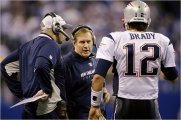
Bill Belichick isn't just a coach - he's become a cultural phenomenon. With his signature cut-off hoodie, minimal expressions, and legendary press conferences, Belichick has created an aura unlike any other coach in sports history. But behind the stoic demeanor lies one of the most brilliant football minds ever to grace the sidelines.
For over two decades, Belichick transformed the New England Patriots from an average franchise into the greatest dynasty in modern sports, collecting six Super Bowl rings as head coach. His career represents the pinnacle of football strategy, preparation, and adaptability. But who is the man behind the hoodie, and how did he become the coaching legend we know today? 🏆
- 24 seasons as Patriots head coach
- 6 Super Bowl championships
- 9 AFC Championships
- 17 AFC East titles
- 31 playoff victories
The numbers are staggering, but they only tell part of the story. Belichick's influence extends far beyond statistics, reshaping how teams approach everything from game planning to roster construction.
The Making of a Mastermind: Belichick's Early Life and Career
Born on April 16, 1952, in Nashville, Tennessee, William Stephen Belichick was destined for football greatness from the beginning. His father, Steve Belichick, was a longtime assistant coach and scout at the United States Naval Academy, immersing young Bill in the game's intricacies from childhood. 👶
Little Bill would sit for hours watching film with his father, absorbing the tactical elements of football that would later become his hallmark. By age 10, he could break down defensive formations and understand complex scouting reports - skills that most coaches take decades to develop.
After playing football at Wesleyan University, Belichick began his coaching journey with a $25-per-week job as a special assistant with the Baltimore Colts in 1975. This humble beginning led to assistant positions with the Detroit Lions and Denver Broncos before he found his first significant role with the New York Giants in 1979.
It was with the Giants, under head coach Bill Parcells, that Belichick established his defensive genius. As defensive coordinator, he masterminded the game plan that defeated the seemingly unstoppable Buffalo Bills offense in Super Bowl XXV - a plan so brilliant it now sits in the Pro Football Hall of Fame! 📋
Belichick's first head coaching opportunity came with the Cleveland Browns from 1991-1995. Though his tenure ended with his firing when the team moved to Baltimore, this period provided crucial lessons that would inform his later success.
- Learned the importance of organizational control
- Developed his philosophy on player versatility
- Refined his approach to media management
- Established his demanding but fair leadership style
After a brief stint with the New York Jets as assistant head coach (and famously resigning as "HC of the NYJ" after just one day when offered the Patriots head coaching job), Belichick arrived in New England in 2000, setting the stage for sports history.
Building the Patriots Dynasty: How Belichick Revolutionized Football
When Robert Kraft hired Belichick in 2000, few could have predicted what would follow. The Patriots were a respectable franchise but far from dominant. That would change quickly as Belichick implemented his vision, starting with a fateful sixth-round draft pick named Tom Brady in his first draft. 🔮
The Brady-Belichick partnership would become the most successful coach-quarterback duo in NFL history, but that overlooks Belichick's comprehensive approach to team building. His philosophy can be summarized in three core principles:
The Patriot Way: Team Above All
Belichick established a culture where no player was bigger than the team. His famous mantra "Do Your Job" encapsulated this approach - each player had specific responsibilities, and their execution of those tasks was valued above individual statistics or accolades.
Stars and role players were treated identically, creating an environment where performance and preparation were the only currencies that mattered. Players who couldn't adapt to this system, regardless of talent, were quickly shown the door. 🚪
Tactical Flexibility: The Ultimate Chameleon
Perhaps Belichick's greatest strength was his adaptability. Unlike coaches who force players into rigid systems, Belichick constantly tailored his approach to maximize his roster's strengths and exploit opponents' weaknesses.
One week, the Patriots might throw 50 passes against a weak secondary; the next, they might run the ball 40 times against a poor rushing defense. This flexibility extended to defense as well, where Belichick would transform his unit from a 3-4 to a 4-3 or employ exotic coverages based on matchups.
Value-Based Roster Construction
Belichick the general manager complemented Belichick the coach perfectly. He pioneered a value-based approach to the salary cap, refusing to overpay for past performance and constantly seeking undervalued assets. 💰
Some notable Belichick roster management principles included:
- Trading players a year too early rather than a year too late
- Finding specialized role players at bargain prices
- Valuing draft capital through trading down or into future years
- Signing players who failed elsewhere but fit his specific systems
- Prioritizing football intelligence alongside physical abilities
This approach wasn't without controversy - beloved players like Richard Seymour, Lawyer Milloy, and even Tom Brady eventually departed when Belichick determined their value didn't match their cost. But the results spoke for themselves as the Patriots maintained excellence across two decades in a league designed for parity. 📈
The Belichick Way: Understanding His Unique Coaching Philosophy
What made Belichick different from the hundreds of other NFL coaches? His approach combined old-school fundamentals with innovative thinking, creating a coaching philosophy unlike any other. Let's explore the key elements that defined his method. 🧠
Preparation Obsession
Belichick's attention to detail was legendary. Former players describe marathon film sessions where no detail was too small for consideration. He would prepare his teams for the most obscure situations - many Patriots victories came through capitalizing on rarely-occurring scenarios that Belichick had nonetheless drilled repeatedly.
This preparation extended beyond game planning. Belichick would manipulate practice conditions to prepare for game environments - watering fields before practice to simulate rain, blasting music to mimic crowd noise, or even deliberately under-inflating practice balls to prepare for cold-weather games where grip would be challenging.
Situational Mastery
If there's one area where Belichick consistently outcoached his opponents, it was situational football. His teams excelled in critical moments that often determine games:
- Red zone efficiency
- Two-minute drills
- Third-down conversions
- Fourth-quarter execution
- Clock management
Patriots players were drilled endlessly on these situations, creating a team that performed with exceptional poise under pressure. While other teams might practice these scenarios occasionally, Belichick made them a daily focus. ⏱️
Psychological Warfare
Belichick understood that football was as much mental as physical. His famous media approach - providing minimal information while occasionally planting strategic messages - was part of a larger psychological game.
He would masterfully use bulletin board material to motivate his team, while never providing the same ammunition to opponents. His relationship with officials, strategic challenge flags, and even his sideline demeanor were all calculated to create psychological advantages.
Constant Evolution
Perhaps most impressively, Belichick never stopped evolving. From the defensive masterminds of the early 2000s to the record-setting offenses of 2007 and beyond, his Patriots constantly reinvented themselves. When the league adjusted to his approaches, Belichick would already be developing the next innovation. 🔄
This adaptability allowed the Patriots dynasty to span multiple eras of NFL football - from the defensive-oriented early 2000s through the offensive explosion of the 2010s. While most coaching systems eventually become outdated, Belichick's approach remained cutting-edge for over two decades.
Looking Back and Forward: Belichick's Place in Football History
As we process Belichick's departure from the Patriots in 2024, it's natural to reflect on his unparalleled legacy. With 333 total victories (including playoffs), Belichick stands just 15 wins shy of Don Shula's all-time record of 348. Whether he pursues another coaching opportunity to break that record remains to be seen, but his place in football history is already secure. 🐐
Belichick's impact extends far beyond his own team. Today's NFL is filled with coaches from his tree - from Mike Vrabel to Brian Flores to Joe Judge. Even coaches who never worked directly under him have adopted elements of his approach, from practice methods to roster construction strategies.
Critics will point to controversies like Spygate and Deflategate, questioning whether Belichick's methods always stayed within the rules. Supporters will counter that his success spans too many years, players, and circumstances to be attributed to anything but brilliant coaching.
What cannot be debated is his influence. Future generations of coaches will study Belichick's methods just as he once studied the game's history. His approach to preparation, adaptability, and organizational consistency has reset the standard for coaching excellence.
As for what's next? At 72, Belichick has earned the right to choose his path forward. Whether he seeks another coaching opportunity, moves to broadcasting, or simply enjoys retirement with his boat aptly named "VIII Rings" (reflecting his six Super Bowl wins as head coach and two as defensive coordinator), his football legacy is eternally secure. 🏆
Key Takeaways from Belichick's Career
- Consistency in approach while remaining tactically flexible is the hallmark of sustainable success
- Team-first mentality creates cultures that transcend individual talent
- Preparation and attention to detail separate good teams from great ones
- Adapting to changing circumstances rather than forcing outdated methods is essential for longevity
- The ability to evaluate talent beyond conventional metrics creates competitive advantages
Whether you admired or criticized him, Bill Belichick changed football forever. His methodical approach, tactical brilliance, and unprecedented success ensure that the hoodie-wearing, grimacing coach will forever be synonymous with football excellence. Here's to the greatest coach of our generation - may his legacy continue to influence the game for decades to come! 👏