Table of Contents
- Introduction to Comprehensive Wage System
- Definition and History of Comprehensive Wage System
- Legal Implications and Controversies
- Political Landscape: Election Promises
- Business Sector Concerns
- Worker Perspective: Pros and Cons
- Future of Labor Policies in Korea
- Final Thoughts
Hey there! 👋 Did you catch the latest labor policy debate that's been making waves in South Korea? The comprehensive wage system (포괄임금제) has suddenly become a hot political topic, especially with the upcoming 2025 presidential election. This once-obscure labor practice is now front and center in campaign promises, with major candidates taking bold stances. As someone who's navigated Korean workplace culture, I find this shift fascinating - and potentially life-changing for millions of workers.
The Hidden Labor Practice That's Shaking Up Korean Politics
The comprehensive wage system might sound like just another boring policy term, but trust me, it affects the daily lives and wallets of countless Korean workers. In simple terms, it's a payment system where employers pay a fixed monthly salary that supposedly includes all overtime, holiday work, and night shift allowances - regardless of how many extra hours you actually work.
Imagine being told, "Your salary is 3 million won per month, and that covers everything - even if you work until midnight or on weekends." Sound fair? That's the debate at the heart of this controversy.
The system has operated in a gray area of Korean labor law for decades, but it's suddenly in the spotlight as presidential candidate Lee Jae-myung has pledged to "completely ban" what he calls an "evil practice that causes unpaid labor." Strong words that reflect growing frustration among workers!
Understanding the Comprehensive Wage System: An Employment Practice Under Fire
What exactly is this system? 🤔
The comprehensive wage system (포괄임금제) is a payment method where:
- Employers pay a fixed monthly amount
- This amount theoretically includes base pay plus allowances for overtime, night shifts, and holiday work
- The extra pay is bundled in regardless of whether you actually worked those extra hours
- Workers receive the same amount each month, making their income predictable
- Employers save administrative costs of tracking variable hours
The system originated decades ago when:
- Manual time tracking was difficult
- Work patterns were less predictable
- Labor laws were less developed
Today, it's commonly found in:
- Security and custodial positions
- IT companies
- Medical facilities
- Small to mid-sized businesses
The Core Problem
The fundamental issue is that many workers end up working significantly more hours than what their "comprehensive wage" fairly compensates. For example, a security guard might be paid for theoretical 20 hours of overtime per month, but actually work 60 hours overtime - essentially providing 40 hours of free labor to their employer.
This creates a situation where:
- Workers perform "unpaid labor" (공짜 노동)
- Actual hourly wages can fall below minimum wage
- Overtime becomes expected rather than exceptional
- Work-life balance is compromised
Legal Grey Areas and Court Battles: Walking a Tightrope
The comprehensive wage system has faced increasing legal scrutiny in recent years. South Korea's Supreme Court has actually limited its application through several landmark rulings, stating that it should only be permitted in exceptional circumstances where:
- It's practically impossible to calculate exact working hours
- The predetermined overtime allowance must reasonably reflect actual work patterns
- The agreement must be explicitly stated and understood by both parties
Despite these limitations, the practice remains widespread, with many employers finding ways to justify its use even when modern time-tracking technology makes exact hour calculation perfectly feasible.
Several court cases have awarded workers significant back pay when their comprehensive wages failed to adequately compensate for actual hours worked. One famous 2019 case involved a security company ordered to pay nearly 100 million won to workers who had been underpaid through the comprehensive wage system for years.
Legal experts point out that the comprehensive wage system often conflicts with Korea's Labor Standards Act, which requires:
- Premium pay for overtime (1.5x regular rate)
- Premium pay for night work (1.5x regular rate)
- Premium pay for holiday work (1.5x regular rate)
Political Battleground: Election Promises and Labor Reform
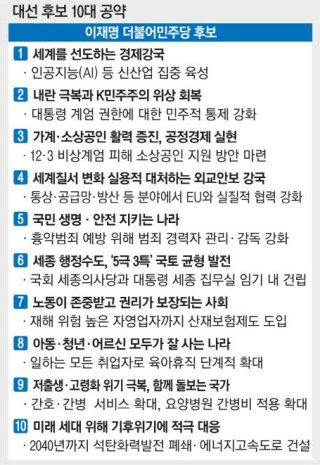
The current political landscape has brought labor practices like the comprehensive wage system into sharp focus. According to the article, Democratic Party presidential candidate Lee Jae-myung has taken a strong stance against it:
"It's an 'evil practice that causes unpaid labor' and I will 'completely ban' it," Lee has declared, making this labor reform a key part of his 10 major campaign promises.
This represents a significant political strategy shift. As the article notes:
"After pursuing right-leaning policies emphasizing economic growth to attract centrist voters, candidate Lee appears to be adopting a pro-labor stance to secure his base supporters."
The Democratic Party's policy director, Seong Jun-jin, defended this position stating, "Labor policies have long been core Democratic Party principles that we cannot abandon," and argued that "rather than hindering economic growth, these reforms will help create healthier economic development."
Other labor-related promises from Lee's campaign include:
- Implementing a "wage distribution disclosure system" to promote equal pay for equal work
- Reducing working hours to below OECD average by 2030
- Amending Labor Union Act Articles 2 and 3 (the "Yellow Envelope Law") to limit employers' ability to sue unions for damages during strikes
- Expanding collective bargaining agreements at industry and regional levels
- Extending industrial accident insurance to self-employed workers in high-risk industries
His opponent, Kim Moon-soo of the People Power Party, has taken contrasting positions focused on:
- Abolishing the Corruption Investigation Office for High-ranking Officials
- Allowing the Board of Audit and Inspection to audit the National Election Commission
- Strengthening capacity to respond to anti-state forces
This stark political divide reflects fundamentally different philosophies about labor rights, economic development, and the proper role of government in labor relations.
Business Community Pushback: Economic Concerns
The business sector has voiced strong concerns about the proposed ban on the comprehensive wage system. The Korea Employers Federation spokesperson highlighted its perceived benefits:
"The comprehensive wage contract guarantees workers a stable monthly income while giving employers predictability in labor costs. Prohibiting it could actually lead to income losses for workers."
Their key arguments include:
- Cost Predictability: The system allows businesses to plan labor costs more effectively
- Administrative Efficiency: Reduces complex calculations and paperwork
- Competitive Concerns: Korean businesses already face high labor costs compared to competitors
- Flexibility Reduction: May limit workplace adaptability in industries with variable workloads
Regarding the wage distribution disclosure system, business groups worry that:
- It could expose sensitive internal information to competitors and foreign rivals
- It might intensify labor-management conflicts
- Implementation costs would burden smaller businesses
On the proposed 4.5-day workweek, employer organizations maintain that:
- Such arrangements should be determined by voluntary labor-management agreements, not legal mandates
- Korea's labor productivity is still lower than major competing nations
- Reducing statutory working hours is premature given economic conditions
The Korea Employers Federation has also appealed for reconsideration of the "Yellow Envelope Law," arguing it "not only disrupts labor-management relations but threatens to upend Korea's entire legal framework that has been stably established."
Worker Perspective: The Human Impact
While the political and business debates continue, it's crucial to understand how the comprehensive wage system affects actual workers in their daily lives. From a worker's perspective, the system presents both advantages and significant disadvantages:
Potential Benefits for Workers
- Income Stability: Regular monthly payments regardless of work fluctuations
- Simplified Understanding: One consistent figure rather than variable calculations
- Guaranteed Minimum: Some workers receive more than they would if paid strictly by hours worked (especially during slow periods)
Common Worker Complaints
- Actual Underpayment: Many report working far more hours than their compensation fairly covers
- Exploitation Risk: The system can normalize excessive overtime without proper compensation
- Lack of Transparency: Difficult to determine if the wage actually covers all work performed
- Work-Life Imbalance: With no financial disincentive for employers to demand overtime, workers often face pressure for excessive hours
Personal stories from workers affected by this system often highlight how it impacts their quality of life. For example, many IT workers report being expected to work until projects are completed, regardless of how many extra hours it takes, with no additional compensation beyond their fixed salary.
Healthcare workers in particular have been vocal about how the comprehensive wage system fails to properly compensate for night shifts and emergency callouts, contributing to burnout and staff shortages in critical care areas.
Looking Ahead: The Future of Korean Labor Policies
If the ban on the comprehensive wage system becomes reality, it would represent one of the most significant labor reforms in recent Korean history. The potential effects could include:
For Workers
- More accurate compensation for actual hours worked
- Better work-life balance as employers face financial incentives to limit overtime
- Potentially higher take-home pay for many who currently work extended hours
- Greater transparency in understanding how their pay is calculated
For Businesses
- Increased direct labor costs, particularly in industries that have relied heavily on the system
- Administrative adjustments to implement accurate time tracking systems
- Potential productivity improvements as working hours become more efficient
- Possible restructuring of work schedules to manage costs
For the Broader Economy
- Potential acceleration of automation in sectors with high labor costs
- Changes in employment patterns, possibly favoring part-time or shift-based arrangements
- Increased domestic consumption if worker compensation rises
- Adjustments in Korea's international competitiveness framework
Beyond the comprehensive wage system, the vision for reduced working hours by 2030 reflects Korea's ongoing transition toward work-life balance. While Korea has historically had some of the longest working hours in the OECD, cultural attitudes are shifting toward valuing quality of life alongside economic prosperity.
Finding Balance: Toward a Fairer Labor System
The debate over the comprehensive wage system ultimately reflects broader questions about what kind of society Korea wants to be. Is maximum economic output the primary goal, or should worker welfare and quality of life be equally important considerations?
The proposed reforms would align Korea more closely with international labor standards while potentially challenging some traditional business practices. As the 2025 election approaches, voters will need to consider how these competing visions for labor policy will affect both their personal circumstances and the nation's economic future.
Key takeaways from this discussion:
- ✅ The comprehensive wage system bundles overtime and other allowances into a fixed monthly salary, often leading to unpaid labor
- ✅ Presidential candidate Lee Jae-myung has pledged to completely ban this practice as part of his pro-labor platform
- ✅ Business groups warn that abolishing the system could raise costs and reduce competitiveness
- ✅ Court rulings have already limited the legal application of the system, but enforcement remains challenging
- ✅ Worker perspectives vary, but many report exploitation through excessive unpaid overtime
- ✅ The debate represents a fundamental choice about balancing economic growth with labor rights
As Korea continues its economic and social development, finding the right balance between business competitiveness and worker protection remains a critical challenge. Whatever the election outcome, the spotlight on these labor practices is already driving important conversations about fairness and sustainability in the Korean workplace.
What do you think? Should the comprehensive wage system be banned completely, reformed, or preserved? I'd love to hear your thoughts and experiences with this system in the comments below! 💭